How Streaming Platforms Reshaped Television Storytelling
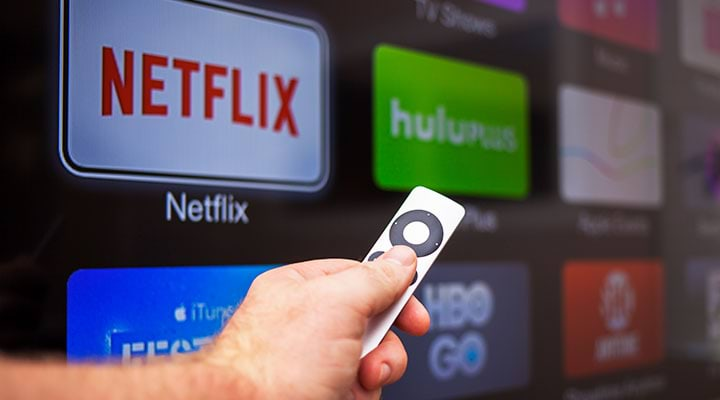
When Netflix released the entirety of House of Cards' first season on a single day in February 2013, it was widely understood as a distribution decision. What took longer to recognise was the degree to which that decision would ripple outward and reshape the stories television was willing to tell — their structure, their pacing, their relationship to the audience's time and attention.
The binge-release model, as it came to be called, did not simply change when people watched television. It changed what television expected of its viewers, what it was permitted to demand from them, and consequently what it was capable of achieving. A series designed to be consumed in several long sittings over a weekend occupies a different imaginative space than one designed to hold attention through weekly separation and return.
Before the Disruption: The Broadcast Inheritance
To understand what streaming changed, it helps to be clear about what it changed from. Broadcast television in its dominant form operated according to a set of structural constraints that were themselves the product of commercial logic: the advertising break, the seasonal schedule, the weekly episode, the requirement to capture and retain a mass audience across multiple viewing periods.
These constraints shaped storytelling in specific ways. Episodes needed self-contained arcs that could satisfy viewers who had missed previous instalments. Season finales needed cliffhangers strong enough to hold audiences through months of absence. Storylines needed to accommodate actors' absences, budget variations, network notes, and the possibility of cancellation or extension. The narrative had to be porous enough to absorb interference.
Cable television, beginning seriously in the late 1990s with HBO's The Sopranos and The Wire, had already loosened some of these constraints. The absence of advertising allowed different episode rhythms. The smaller audience scale reduced the pressure for broad accessibility. The premium subscription model created economic conditions in which difficult, uncommercial narratives could be financially justified.
But cable still operated within seasonal structures, weekly release schedules, and the basic economics of channels competing for eyeballs. What streaming introduced was different in kind, not just degree.
The Architecture of Binge
When all episodes are available simultaneously, several things change. The cliffhanger loses much of its functional value — if the next episode is one click away, the moment of suspension between episodes collapses. Writers adapted by shifting the tension from episode endings to the middle of episodes, constructing narrative rhythms calibrated to be paused but not necessarily left overnight.
The "previously on" recap — a structural concession to the audience's potential week-long forgetting — became less necessary. Detail could accumulate with greater confidence that viewers would remember it. Dialogue could allude to events from several episodes prior without losing the portion of the audience that tuned in late.
Episode length, historically constrained by broadcast slots, became genuinely variable. Netflix in particular encouraged its showrunners to let episodes run as long as the material warranted. The results were mixed: some series used the freedom to breathe and develop at natural rhythms; others expanded to fill available space without the discipline that constraint can provide.
The season itself changed as a unit. Streaming originals experimented with shorter runs — six episodes, eight episodes — that more closely resembled the British model than American broadcast television's traditional twenty-two. The limited series, a form that had existed in television for decades but rarely achieved prestige status in American production, became a streaming mainstay.
The Rise of the Limited Series
Perhaps no format change has been more consequential for storytelling quality than the rehabilitation of the limited series. A story told across six to eight episodes, with a defined ending known in advance, allows a different kind of narrative architecture than an open-ended ongoing series built to run as long as it is commercially viable.
The constraints are productive. Characters can be fully committed to their arcs without the hedging that ongoing series require — the narrative cannot preserve a character indefinitely against storytelling logic simply because they drive ratings. Endings can be designed rather than manufactured under cancellation pressure or audience demand. The limited run creates the conditions for a complete work.
Chernobyl (2019), Fleabag (2016-2019), Mare of Easttown (2021), The Night Of (2016), Sharp Objects (2018): the decade produced an extraordinary range of limited series that demonstrate the format's particular capacities. Each is a story with a definable shape — with a beginning that informs the ending, an architecture that rewards completion.
"The best television of the streaming era treats the viewer as a collaborator in attention, not a passive recipient of scheduled content."
What Streaming Took Away
The streaming era has not been uniformly beneficial to television storytelling. The simultaneous release of entire seasons has weakened collective experience — the shared cultural moment of waiting for next week's episode, the water-cooler conversation, the social dimension of watching on the same night as everyone else. Game of Thrones, notably a weekly broadcast series, generated a cultural intensity of discussion that streaming originals rarely replicate.
The abundance of content — often described as a "golden age" — has produced genuine difficulty with visibility. Excellent series arrive, find modest audiences, and disappear from cultural conversation faster than weekly broadcast shows managed. The algorithm's role in surfacing content creates its own distortions, favouring certain types of material and certain audience profiles over others.
The economics of streaming have also produced instability. Series are cancelled mid-story, leaving narrative threads unresolved and audiences frustrated. The economics of subscriber growth and retention create pressures that are different from but not necessarily less distorting than advertising-driven broadcast models. Streaming is not free from commercial constraint — it simply operates within different ones.
International Co-production and Global Storytelling
One of streaming's most genuinely transformative effects has been on the geography of television production. Netflix, Amazon, Apple, and their competitors commission original content from — and for — global markets in ways that traditional broadcast television never attempted at scale.
Squid Game arrived from South Korea and became a global phenomenon within days of release. Money Heist from Spain achieved substantial international viewership. Dark from Germany, Call My Agent from France, Lupin from France, Sacred Games from India: series rooted in specific national contexts found international audiences through streaming's distribution infrastructure.
This has created new pressures on non-English-language production — the expectation of international appeal can homogenise or distort stories that would be served by remaining firmly rooted in their local contexts. But it has also given audiences access to storytelling traditions and perspectives that were previously difficult to encounter outside film festival circuits or specialist DVD releases.
Where the Form Is Heading
The streaming landscape in 2025 is more complex than the one that emerged with Netflix's early ambitions. Multiple major platforms compete for content and subscribers. The economics are under sustained pressure. Some platforms have retreated from the most expensive production models; others have experimented with theatrical-style releases or advertising-supported tiers.
What has not retreated is the appetite for long-form, serialised, character-centred storytelling that streaming helped to normalise. That appetite now exists across platforms and formats. The audiences that grew up watching entire seasons in concentrated bursts have different expectations of narrative density, visual quality, and tonal complexity than previous broadcast generations.
Whether streaming's structural changes are permanent or transitional remains genuinely uncertain. Television has proven, across its history, to be an extraordinarily adaptive medium. What the streaming era has demonstrated is that the form's creative ambitions are not limited by its domestic distribution context — and that audiences, given access to quality, will find it.
Related articles: