Cinema History: From Silent Frames to Global Blockbusters
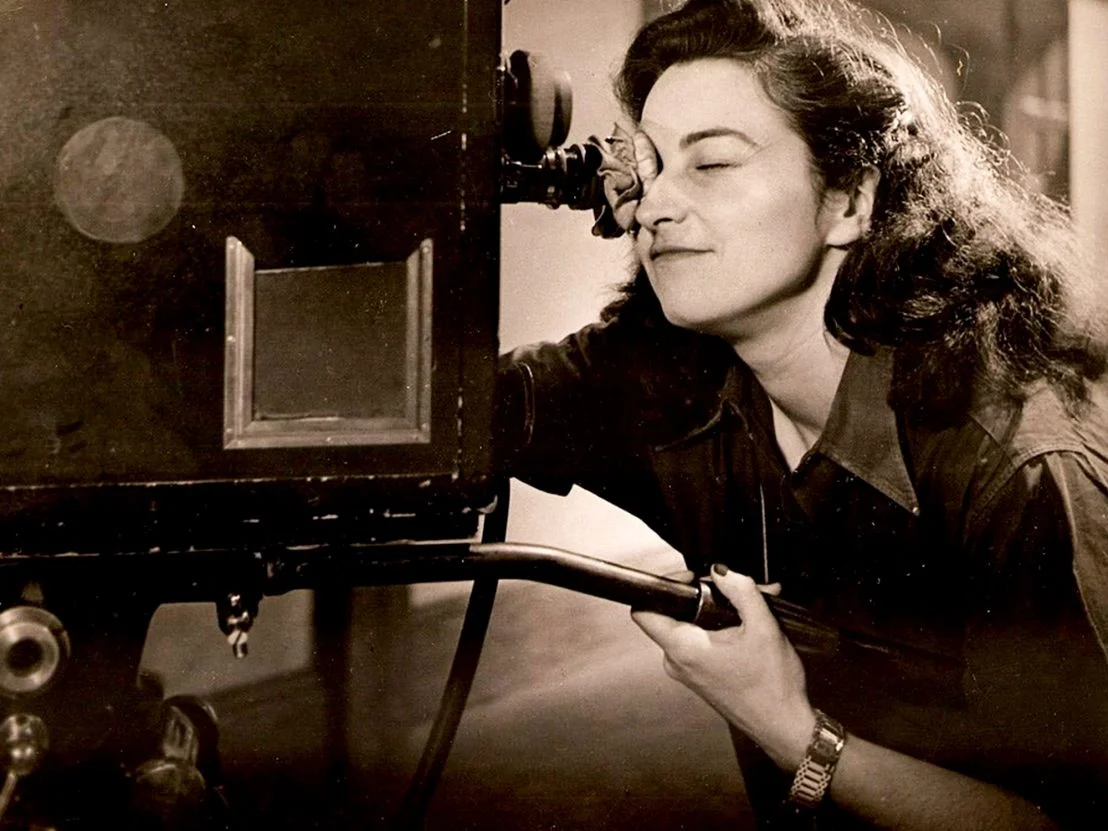
On the evening of December 28, 1895, in the basement salon of the Grand Cafe on the Boulevard des Capucines in Paris, approximately thirty people watched a series of short films projected onto a screen by Auguste and Louis Lumiere. Among the images: workers leaving a factory gate, a baby being fed, a train arriving at a station. The audience, by most accounts, was startled. Some reportedly flinched when the locomotive appeared to advance toward them. The century of cinema had begun.
What is remarkable about that first public screening is not the technical achievement alone — though the Cinematographe, the brothers' combined camera and projector, was a genuinely elegant piece of engineering — but the speed with which cinema recognised its own possibilities. Within months of that Paris premiere, filmmakers across Europe and North America were experimenting with storytelling. Within a decade, editing had been discovered as cinema's fundamental grammar. Within two decades, the feature film existed.
The Silent Era: A Language Without Words
Early cinema was not silent in the sense we might imagine. Screenings were typically accompanied by live music — a pianist, a small orchestra, sometimes a narrator. The absence of synchronised dialogue was a technical constraint, not an aesthetic choice, and filmmakers worked within it with increasing sophistication.
D.W. Griffith, working at Biograph from 1908 onward, developed much of the vocabulary that would define cinema for generations: the close-up, parallel editing, the fade, the iris shot. His ambitions grew beyond short films, culminating in The Birth of a Nation (1915) and Intolerance (1916) — the former widely condemned today for its racist content, but both technically landmark works in terms of scale and formal control.
Meanwhile, in Europe, filmmakers were developing alternative traditions. German Expressionism — exemplified by The Cabinet of Dr. Caligari (1920), Nosferatu (1922), and Metropolis (1927) — used distorted sets, extreme angles, and deep shadow to externalise psychological states. Soviet filmmakers including Sergei Eisenstein and Dziga Vertov were theorising and practising montage as a political tool, a way of forcing meaning through juxtaposition rather than continuity.
"Cinema is not a slice of life but a piece of cake." — Alfred Hitchcock
The silent era produced its own galaxy of stars — Buster Keaton, Charlie Chaplin, Harold Lloyd, Lillian Gish, Mary Pickford — many of whom had developed their skills in vaudeville and theatre. The transition to sound in 1927 would disrupt many of these careers, particularly those whose voices did not match audience expectations, but it would also open cinema to an entirely new range of storytelling.
Sound and the Studio System: Hollywood's Golden Age
The Jazz Singer (1927) is typically cited as the moment synchronised sound arrived in mainstream cinema. It was not a sudden revolution — early sound films were technically cumbersome, and many directors and critics mourned the loss of visual purity — but within a few years, the industry had adapted entirely. By the early 1930s, silent films had essentially stopped being made for commercial release.
The decade that followed produced cinema of remarkable variety and vitality. The Hollywood studio system — with its vertically integrated model of production, distribution, and exhibition — created conditions that were simultaneously constraining and productive. Directors worked quickly, on assigned material, with studio-allocated budgets and personnel. The constraints forced efficiency and craft. The best films of the 1930s and 1940s have an economy and momentum that reflects this environment.
Genre became the organising principle of studio production: westerns, musicals, screwball comedies, gangster films, melodramas, noir thrillers. Each genre had its conventions, its stars, its reliable pleasures. Audiences knew what they were getting. Directors and writers worked variations on established forms — some predictable, some genuinely inventive.
Among the period's significant achievements: the screwball comedies of Howard Hawks and Preston Sturges, which brought a cynical wit and gender fluidity unusual in American popular culture; the noirs of Billy Wilder, Otto Preminger, and Carol Reed, which drew on German Expressionism to explore postwar anxiety; the melodramas of Douglas Sirk, which used the glossy surfaces of 1950s domesticity to examine their own period's repressions.
The Auteur Era and International Cinema
The late 1950s saw simultaneous explosions of creative energy across multiple national cinemas. In France, a group of critics-turned-filmmakers associated with the magazine Cahiers du Cinema — Jean-Luc Godard, Francois Truffaut, Claude Chabrol, Eric Rohmer, Jacques Rivette — began making films that treated cinema as a personal art form. Truffaut's The 400 Blows (1959) and Godard's Breathless (1960) arrived like dispatches from a different world: handheld cameras, location shooting, jump cuts, characters who acknowledged the camera, stories that ended without resolution.
The French New Wave did not arrive in isolation. Italian neorealism had already established the value of location shooting and non-professional actors. Japanese cinema, largely unknown in the West until Rashomon won the Golden Lion at Venice in 1950, offered Kurosawa's formal rigour, Mizoguchi's sustained long takes, Ozu's radical stillness. Swedish cinema had Bergman. Polish cinema had Polanski and Wajda. Brazilian Cinema Novo had Glauber Rocha.
The concept of the auteur — the director as the primary creative intelligence of a film, the source of its consistent themes and stylistic decisions — became the theoretical lens through which serious cinema was understood. It was a useful simplification that elevated the form's critical standing while sometimes obscuring the collaborative nature of filmmaking.
New Hollywood and the Director as Star
American cinema in the early 1970s underwent a transformation that remains, arguably, the most concentrated period of artistic ambition in the country's film history. The collapse of the studio system's production code, the influence of European art cinema, and a generation of directors shaped by film schools and film culture produced a brief window in which personal, difficult, formally ambitious films were made within the commercial mainstream.
The Godfather (1972), The Conversation (1974), Chinatown (1974), Nashville (1975), Taxi Driver (1976), Annie Hall (1977), Days of Heaven (1978), Apocalypse Now (1979) — the decade's output was extraordinary in its range and ambition. Coppola, Altman, Polanski, Scorsese, Allen, Malick, Ashby, De Palma: directors whose divergent visions had been given unprecedented latitude by studios that briefly trusted audience appetite for challenging material.
The window closed decisively with the commercial success of Jaws (1975) and Star Wars (1977) — not because those films were artistically impoverished, but because they demonstrated a different model of cinema's commercial potential: the concept film, the franchise, the event movie. The blockbuster era had arrived.
The Blockbuster Era and Global Cinema
The years from 1977 onward saw Hollywood's centre of gravity shift toward high-concept, effects-driven, franchise-oriented production. This is often narrated as a story of decline, and in some respects it is: the space for mid-budget, character-driven adult drama within mainstream studio distribution narrowed significantly. The kind of film that Coppola or Altman made in the early 1970s became increasingly difficult to finance through conventional channels.
But the picture is more complicated than simple deterioration. The blockbuster era produced genuinely significant cinema — including much of Spielberg's work, the science fiction of the 1980s, and eventually the mature superhero narratives of the 2000s and 2010s. And alongside the commercial mainstream, independent cinema grew steadily from the mid-1980s onward, providing an alternative ecosystem for films outside the studio model.
Simultaneously, cinema's global geography was shifting. South Korean cinema, following the relaxation of censorship laws in the 1990s, produced a generation of filmmakers — Bong Joon-ho, Park Chan-wook, Lee Chang-dong — whose work gained international attention and, eventually, mainstream recognition. Iranian cinema, working under significant state restrictions, developed a tradition of poetic realism associated with Abbas Kiarostami and Jafar Panahi. Mexican filmmakers including Alfonso Cuaron, Alejandro Gonzalez Inarritu, and Guillermo del Toro moved between national and Hollywood production with increasing fluency.
Digital Cinema and the Democratisation of Production
The transition from photochemical to digital capture, which accelerated through the 1990s and was largely complete by the early 2010s, transformed both the economics and aesthetics of filmmaking. The cost of production fell dramatically. The tools of professional-quality cinema became accessible to filmmakers working outside established industry structures.
Digital also changed how films looked — a change that remains aesthetically contested. The grain of photochemical film, its particular relationship to light and shadow, had shaped cinema's visual language for a century. Digital introduced different qualities: a clarity, a flatness under certain conditions, a range of new possibilities in post-production. The ongoing debate about digital versus film capture reflects genuine differences in what each medium does to an image.
The streaming revolution — discussed elsewhere in this publication — further complicated the landscape by creating new distribution channels that operated outside traditional theatrical exhibition. Films now move through an expanding set of contexts: theatrical release, streaming platforms, video on demand, physical media. What constitutes a "cinema" experience has become a genuinely open question.
What Endures
More than a century after those first projected images in Paris, cinema remains an art form defined by its particular relationship to time, light, and collective experience. The specific technologies change — the Cinematographe gives way to 35mm film gives way to digital capture gives way to whatever comes next. The storytelling ambitions persist.
The films that endure across decades tend to share certain qualities: a clarity of intention, a distinctiveness of vision, a willingness to trust the audience's intelligence and patience. These qualities appear across genres, budgets, national contexts, and historical periods. They are not exclusive to any particular tradition or technology.
What cinema has demonstrated across its history is an extraordinary capacity for reinvention — a medium that has absorbed each technological disruption and emerged with new possibilities. The story is far from over.
Related articles on Zunqerix: